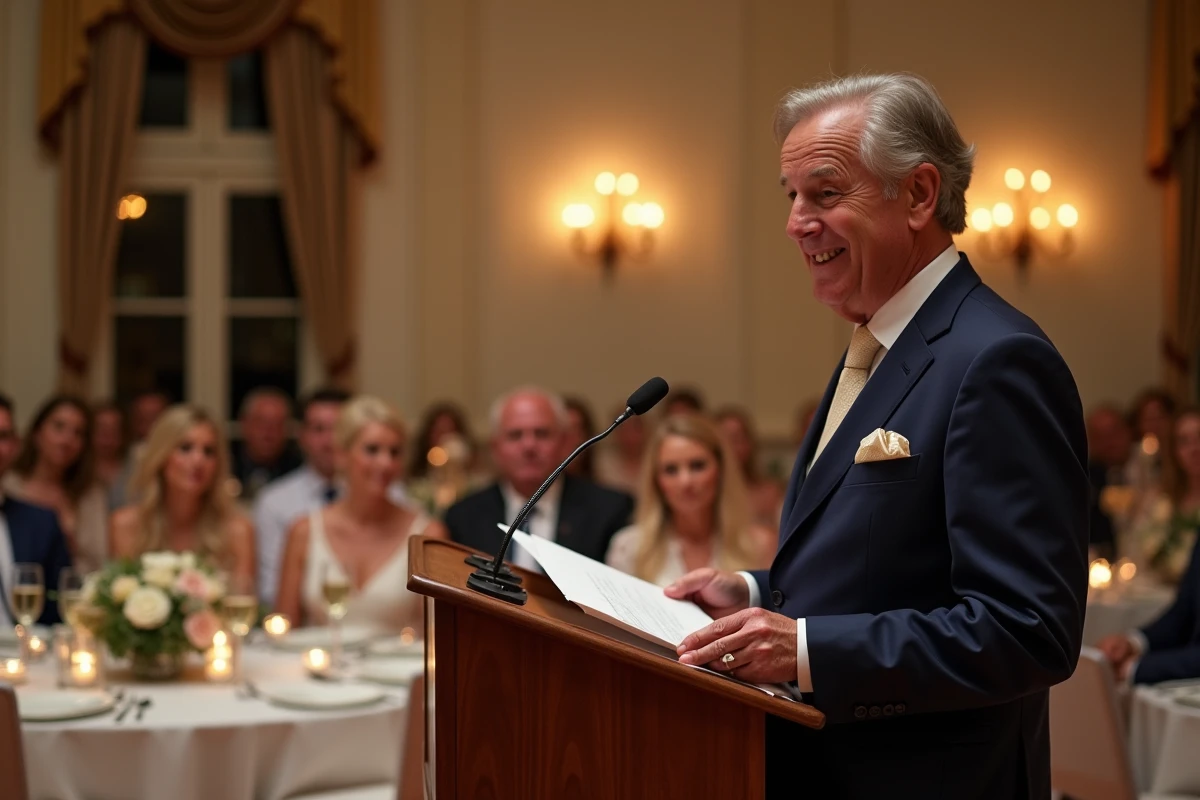
The mayor’s speech at a civil wedding is framed by specific legal obligations, but the personalized part remains entirely free. The question arises: how to structure this speech so that it is both compliant with the Civil Code and sufficiently unique to leave a lasting impression? This article analyzes the components of a successful speech, distinguishing between what falls under regulatory framework and what is a rhetorical choice.
Legal Framework and Freedom of Personalization in the Mayor’s Speech
Since the reform of the Civil Code that came into effect on July 1, 2022, mayors have a broader margin to personalize their intervention, provided they first read all the mandatory articles (articles 75 and following of the Civil Code). The Association of Mayors of France (AMF) emphasizes this in its practical guide to civil marriage.
This distinction between mandatory legal content and personalized remarks changes the approach to writing. The mayor cannot improvise on the articles of law, but everything following the official reading belongs to them.
| Part of the Speech | Content | Margin of Freedom |
|---|---|---|
| Reading of the Articles of the Civil Code | Articles 75 and following (rights and duties of spouses) | None: full reading required |
| Personal Remarks | Anecdotes, congratulations, advice, references to the couple | Total, provided respect and neutrality are maintained |
| Closing Formulas | Declaration of union, signature | None: legally imposed formula |
An effective mayor’s speech for a wedding takes this structure into account: the legal part lays the foundation, while the free part creates emotion.
Inclusive Mayor’s Speech: Adapting the Tone to New Forms of Conjugality
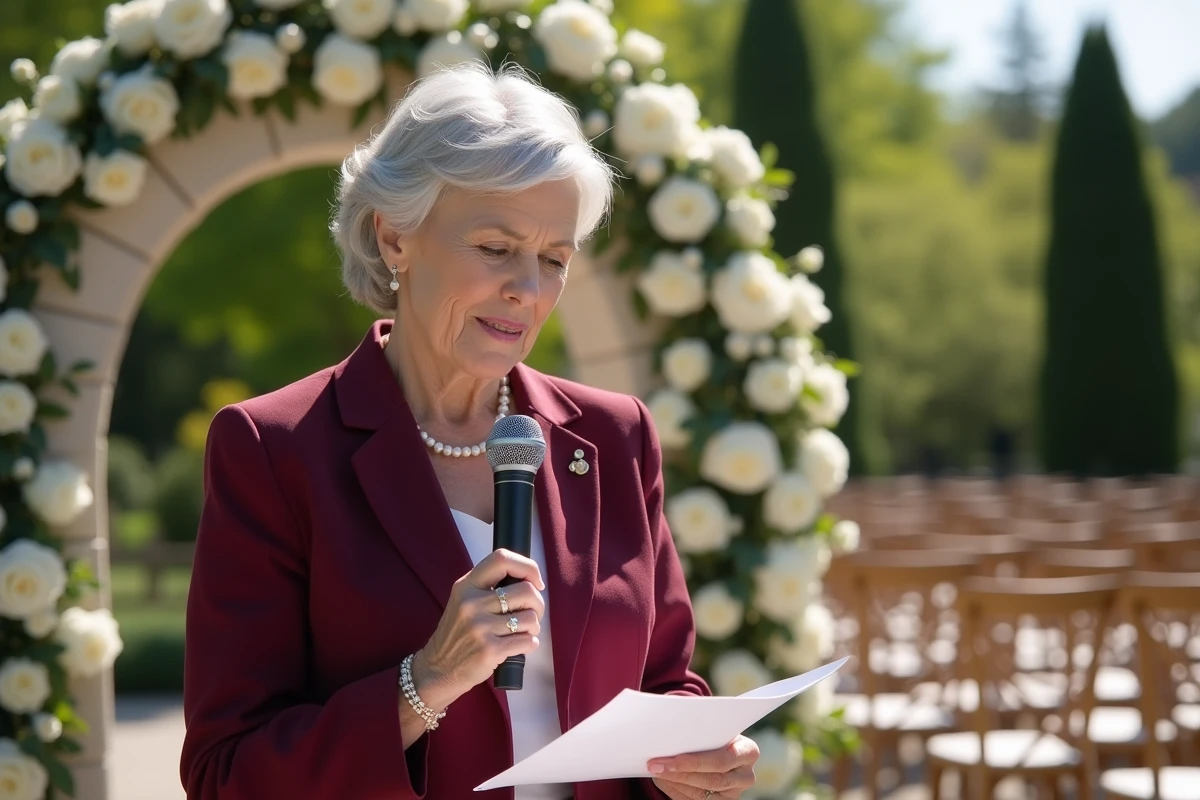
The AMF now recommends adapting the mayor’s speech to new forms of conjugality. Same-sex couples, remarriages, couples of different nationalities, older spouses: each configuration calls for a different register.
Congratulations and humor inherited from a single model no longer work. A mayor addressing two women with expressions designed for a heterosexual couple creates a noticeable dissonance for the entire assembly.
Avoiding Gender Stereotypes in the Speech
The AMF explicitly points out the need to avoid gender stereotypes in formulations. Referring to the bride as a person “finally conquered” or the groom as a man “losing his freedom” belongs to a dated register.
- Replace gendered references with couple-centered formulations: “your mutual commitment” instead of “the role of the wife and husband”
- Adapt anecdotes to the real experiences of both individuals, without projecting a typical family model
- Favor neutral terms when the context allows: “partners,” “spouses” in plural, “your union”
An emotional speech relies on the accuracy of the message, not on ready-made formulas. A mayor who takes the time to know the couple’s journey creates a much stronger effect than one who recycles a generic text.
Structure of a Memorable Mayor’s Speech: Three Functional Blocks
The personalized part of the speech benefits from a simple architecture. Three blocks are sufficient to maintain the guests’ attention without prolonging the ceremony.
Opening Block: Grounding the Moment
The mayor situates the ceremony in a concrete context. Mentioning the location, date, a weather detail, or a significant event of the day creates an immediate anchor. The assembly understands that this speech was written for this ceremony, not copied from a template.
Central Block: The Couple in Focus
Personal anecdotes transform a correct speech into a memorable one. A memory of the future spouses’ meeting, a complementary character trait, a shared project: these elements give substance to the message.
The duration of this block determines the emotional impact. Too short, it sounds hollow. Too long, it becomes tedious. Two to three well-chosen anecdotes are enough to maintain attention without turning the ceremony into a monologue.
Closing Block: Looking to the Future
Before returning to the legal formula of declaration of union, one or two phrases directed towards the couple’s future allow for a transition. No paternalistic life advice, but a sincere evocation of what awaits the spouses.
Training Elected Officials in Public Speaking at Wedding Ceremonies
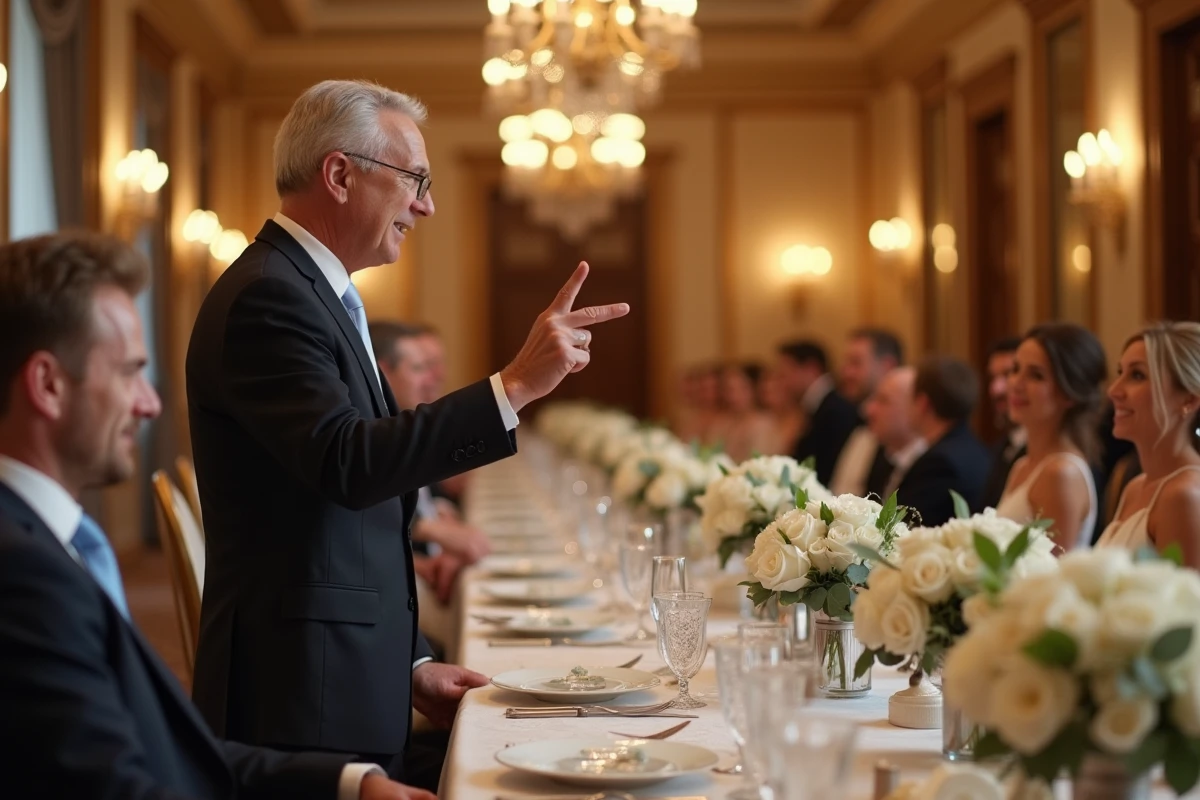
Several training centers for local public service report a notable increase in requests for “public speaking at ceremonies” training during their recent sessions. The observation behind this trend: celebrating a civil marriage cannot be improvised, even for experienced elected officials.
These trainings cover stress management, voice placement, eye contact with the newlyweds and the assembly, as well as writing the personalized speech. Feedback from the sessions shows that the main difficulty is not writing the text, but delivering it orally in front of an emotionally charged audience.
- The speaking rate should be slowed compared to a municipal council speech
- Pauses after each significant sentence allow time for emotion to settle
- Alternating gaze between the newlyweds and the guests creates a sense of inclusion
- Reading the entire text is preferable to partial improvisation, which risks memory lapses
A well-written speech but poorly delivered loses half its effect. Rhythm, volume, and eye contact matter as much as the chosen words. Elected officials who invest a few hours in oral preparation receive significantly more positive feedback from couples and their families.
The mayor’s speech at a civil wedding remains one of the few moments when an elected official addresses citizens directly in an intimate setting. The combination of a respected legal framework, a message tailored to the couple, and a well-prepared oral delivery produces what the newlyweds and their loved ones will remember long after the ceremony.