
Loading three cabin suitcases into a trunk advertised as having more than 400 liters, only to find one left on the sidewalk. This situation has become common since hybrid and electric versions have redistributed interior space without clearly indicating it in the sales brochures. Before signing an order form in 2026, the trunk size deserves a much more thorough check than just a glance at the liters displayed in the catalog.
Advertised volume and usable volume: two different realities
We’ve all seen those comparisons where a compact SUV shows a larger volume than a station wagon, while in practice, the station wagon can hold more luggage. The explanation lies in the measurement method. Manufacturers use the VDA standard (stacked calibrated cubes) or measure the volume “under the shelf,” which gives a clean figure but is disconnected from the actual shape of the trunk.
Since 2024-2025, several brands have started to communicate the maximum loading length and the width between the wheel arches. These two data points are much more informative than a gross volume because they determine whether a folded stroller, a mountain bike, or a flat-pack piece of furniture can fit without disassembling anything.
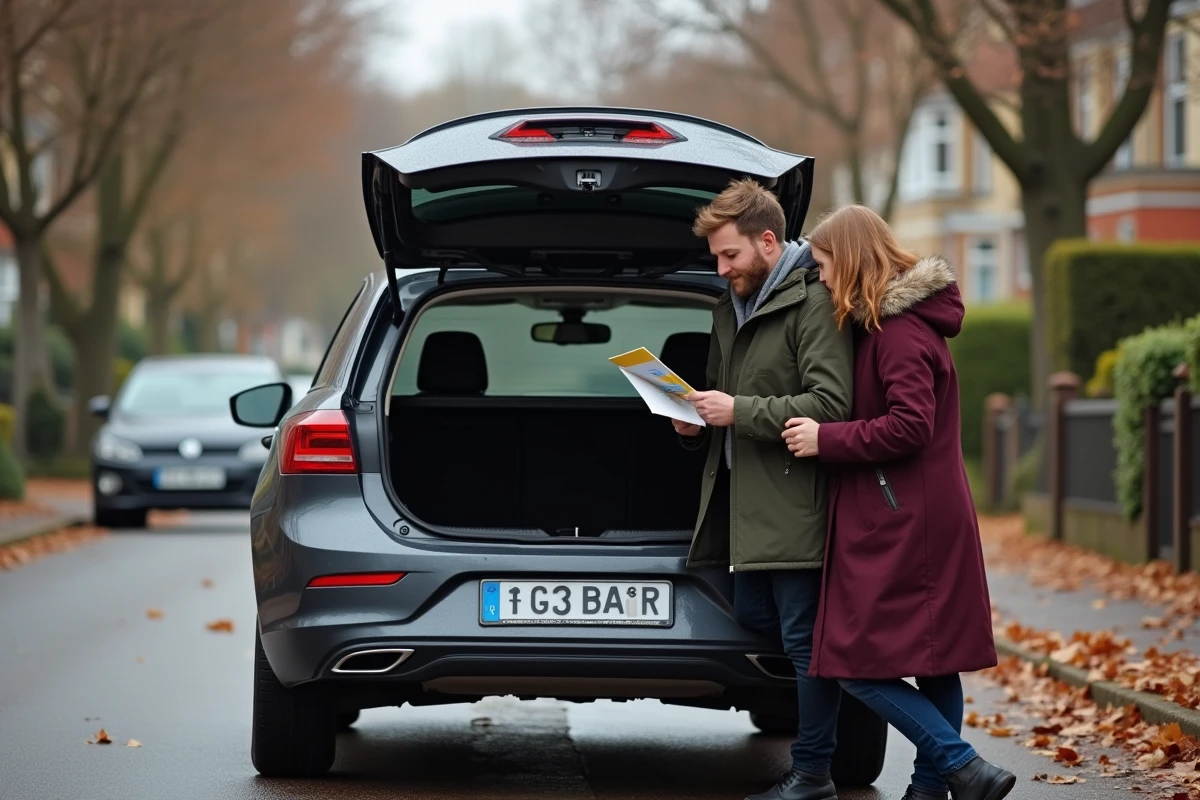
A very sloped tailgate, a double floor imposed by the battery, or a raised loading threshold can render a significant part of the theoretical volume unusable. Before purchasing, it’s wise to come with the bulkiest item you regularly transport, rather than comparing liters on a screen. To learn more on the Auto Tech website, several trunk configurations are detailed model by model.

Trunks of hybrid and electric cars: the battery trap
This is the blind spot of the 2026 market. On the same model, the plug-in hybrid or mild hybrid 48V version can lose a notable trunk volume compared to the thermal version. The battery is located under the rear floor, which raises the threshold, eliminates the spare tire, and reduces usable depth.
Sales catalogs highlight electric range and reduced consumption, but the loss of modularity once the seats are folded almost never appears in bold print. The Citroën C4 Hybrid 110 e-DSC6, for example, retains a comparable volume with the seats up, but modularity significantly decreases as soon as you want to fold the backs to load flat.
Points to check at the dealership for a hybrid or electric vehicle
- The height of the loading threshold compared to the bumper: a high threshold of more than a few centimeters complicates loading heavy objects and strains the back.
- The presence or absence of a removable floor: on some electrified versions, the double floor is no longer modular, eliminating the lower storage.
- The continuity of the floor with the seats folded: a drop between the trunk and the folded backrest prevents sliding long objects like skis or a board.
Comparing the technical specifications of the thermal version and that of the hybrid version of the same vehicle remains the most reliable method to accurately measure what is lost. Feedback varies on this point depending on the models, but the gap is confirmed across the majority of ranges renewed in 2025-2026.
SUV, station wagon, or sedan: which body style for a large trunk
The SUV dominates the market, but a compact station wagon often holds more luggage than an SUV of equivalent size. The reason is geometric: the station wagon offers a flat roofline and a vertical tailgate, maximizing usable volume in the corners. The SUV, with its rounded roof and elevated floor, sacrifices useful space in height.
For family use with a stroller, weekly shopping, and vacations, the station wagon remains the most rational body style. The SUV is more justified when a higher ground clearance is needed (for paths, mountains) or for a higher driving position for comfort.
Selection criteria based on actual use
Before settling on a body style, you can list your three most frequent loading trips. A trunk suited to these three situations will cover almost all needs. Buying an SUV “just in case” for one camping weekend a year means paying a premium in price, consumption, and bulk for the other 50 weeks.
- Daily transport (shopping, backpacks, sports equipment): a sedan or compact station wagon is more than sufficient, with a low threshold for quick loading.
- Family vacations (suitcases, stroller, beach gear): a station wagon or family SUV with a flat floor, checking the width between the wheel arches.
- Occasional transport of bulky items (furniture, bikes): prioritize the loading length with seats folded rather than the advertised gross volume.
Reliability and budget: don’t forget the total cost before choosing size
Focusing on the trunk sometimes makes one forget the rest. A larger vehicle consumes more, costs more in insurance and maintenance, and is harder to park. In the used car market, family SUVs with large trunks depreciate less quickly, making the purchase of a used one less advantageous than an equivalent station wagon.
The car budget is not limited to the purchase price. Incorporating actual consumption and insurance costs before comparing trunks avoids unpleasant surprises in use. A smaller trunk in a reliable and economical vehicle will always be preferable to a giant trunk in a car that drains the monthly budget.
The 2026 market offers a wide choice between hybrids, electric, and thermal vehicles. For each type of engine, trunk size varies, sometimes significantly. Spending twenty minutes at the dealership with a tape measure and your everyday items remains the most cost-effective action before signing anything.