
Vacuum sealing food does not sterilize it. It removes the oxygen from the packaging, which slows the proliferation of most aerobic bacteria, but does not destroy the microorganisms already present. Measuring the actual difference in shelf life between vacuum-sealed food and the same food stored conventionally helps to understand where this technique provides a tangible benefit and where it reaches its limits.
Shelf life of vacuum-sealed food compared to conventional storage
The gain in shelf life varies greatly depending on the type of food and the storage temperature. The table below summarizes the orders of magnitude derived from available data for refrigerated storage.
| Type of food | Conventional refrigerator | Vacuum refrigerator | Vacuum freezer |
|---|---|---|---|
| Raw meat (beef, pork) | 2 to 3 days | About 2 weeks | More than 12 months |
| Fresh fish | 1 to 2 days | 4 to 6 days | More than 12 months |
| Raw vegetables | 3 to 7 days | Up to 3 weeks | More than 12 months |
| Fresh fruits | 3 to 5 days | 1 to 2 weeks | More than 12 months |
| Prepared dishes | 2 to 3 days | About 10 days | More than 12 months |
The technique multiplies the shelf life of preparations by 3 to 5 times in the refrigerator. In the freezer, it mainly limits freezer burn and texture loss rather than the duration itself.
A table of home vacuum food preservation detailed by product family allows for refining these benchmarks based on what you are actually storing.
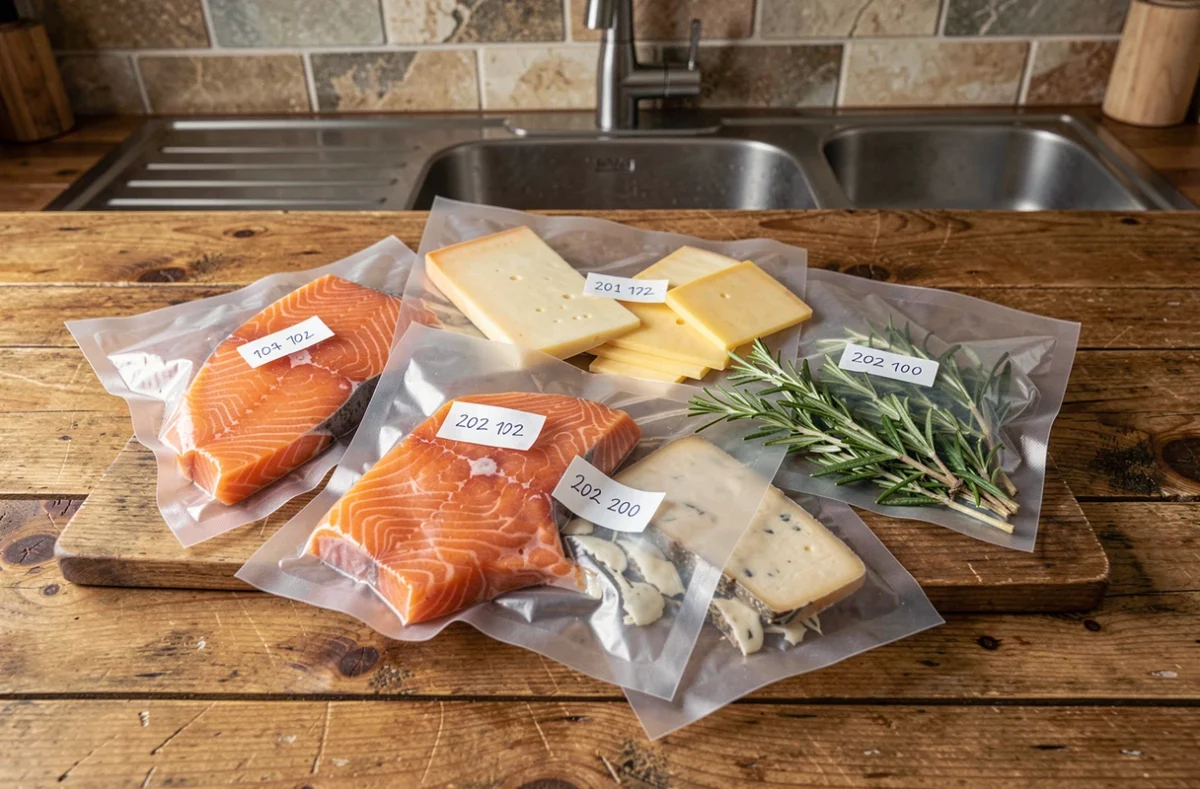
Refrigerator temperature: the factor that vacuum sealing does not compensate for
Removing air significantly reduces the presence of aerobic bacteria in the packaging. The remaining microorganisms, including some anaerobic pathogens, continue to develop if the temperature allows.
Clostridium botulinum poses the most documented risk. This bacterium produces a toxin in low-oxygen environments, precisely the conditions created by vacuum sealing. An intact bag does not guarantee that the food is safe if the cold chain is not maintained.
The actual temperature inside a domestic refrigerator often fluctuates by several degrees from the displayed value. Placing an independent thermometer in the vacuum-sealed food storage area allows you to check that the temperature remains sufficiently low. The recommended shelf life loses its relevance as soon as the temperature exceeds the expected threshold.
Vacuum-sealed food in the refrigerator: variations in results depending on preparation
Not all foods react the same way to the absence of oxygen. Two parameters explain most of the observed variations.
Water content and bacterial activity
Foods with high water content (fish, ripe fruits, sauced dishes) provide a favorable environment for residual bacteria. Their gain in shelf life under vacuum remains more modest than that of dry or semi-dry products. Dried meat or hard cheese gains proportionally more days than a fresh fish fillet.
Condition of the food before packaging
Vacuum sealing does not reset the freshness of a product. A food that has been opened for two days and vacuum-sealed on the third day does not regain its initial shelf life. The microbiological clock continues from where it left off.
Cooling cooked dishes before vacuum sealing reduces condensation in the bag. This residual moisture accelerates degradation and can compromise the seal’s integrity. Packaging a still-warm dish shortens the shelf life instead of extending it.
Choice of bags and seal quality: impact on actual shelf life
The thickness and composition of the bag directly influence the permeability to residual oxygen. A bag that is too thin or not designed for vacuum sealing gradually allows air to pass through, negating the benefit in a few days.
- Embossed bags (with relief) are designed for external suction machines, the most common in domestic use. Their structure channels air towards the pump and allows for more complete extraction.
- Smooth bags require a chamber machine, which is more expensive. They generally provide a superior barrier to oxygen, suitable for liquids and marinades.
- Cutting rolls allow you to adjust the size of the bag to the food, which limits the volume of residual air after sealing. An oversized bag contains more trapped air in the folds.
An incomplete seal reduces the preservation to that of a conventional package. Systematically checking the airtightness after sealing (by gently pressing the bag) helps avoid discovering the problem too late.
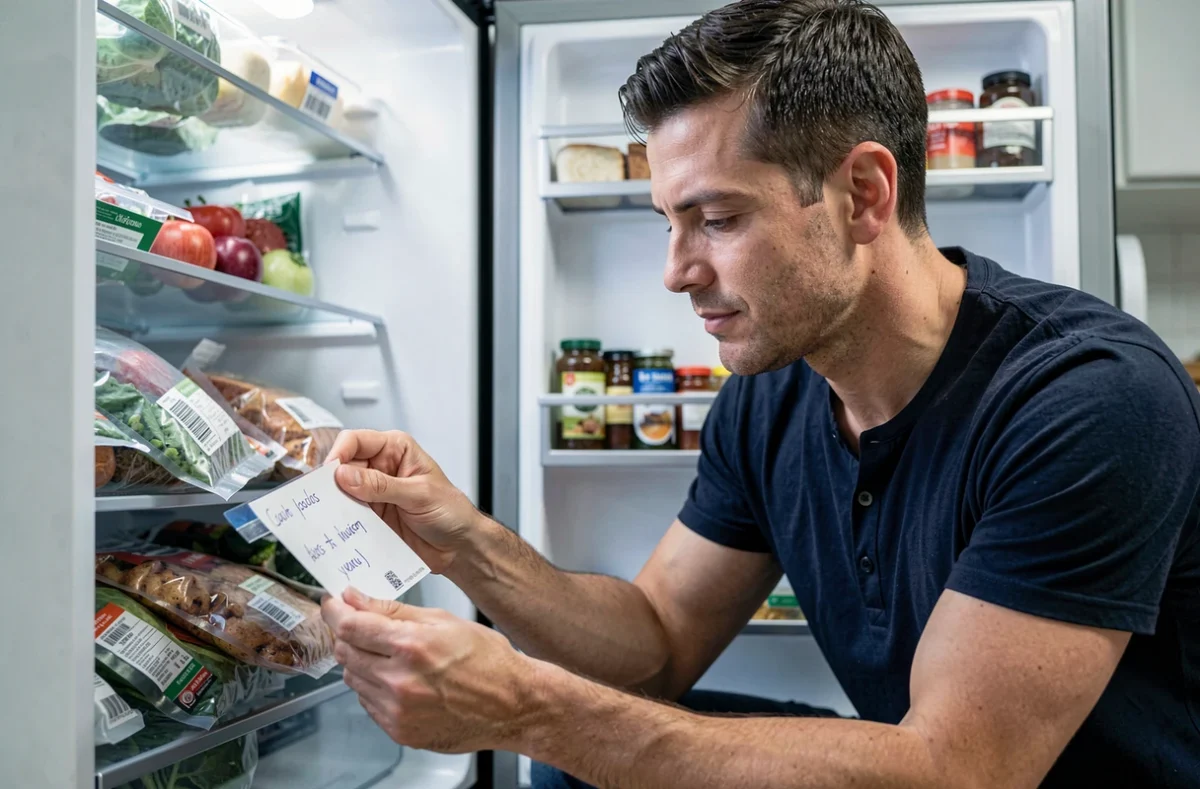
Vacuum sealing and freezing: two complementary methods, not interchangeable
Combining vacuum sealing and freezing produces the longest storage durations. Freezing halts bacterial development, while the absence of air prevents oxidation and freezer burn that alters texture.
However, vacuum sealing alone does not replace freezing for highly perishable products. Fresh fish vacuum-sealed and stored in the refrigerator gains a few days, not a few weeks. For storage beyond a week, freezing remains the reference method.
Batch-cooked prepared dishes illustrate this complementarity well: portioning, cooling, vacuum sealing, and then freezing allows meals to be stored for over a year without notable degradation in taste quality. Taking out a portion the night before and thawing it in the refrigerator in its sealed bag limits handling and recontamination.
Domestic vacuum sealing provides a measurable freshness gain, provided that one does not attribute properties to it that it does not have. Storage temperature, the initial condition of the food, and the quality of the seal determine the result as much as the machine itself.