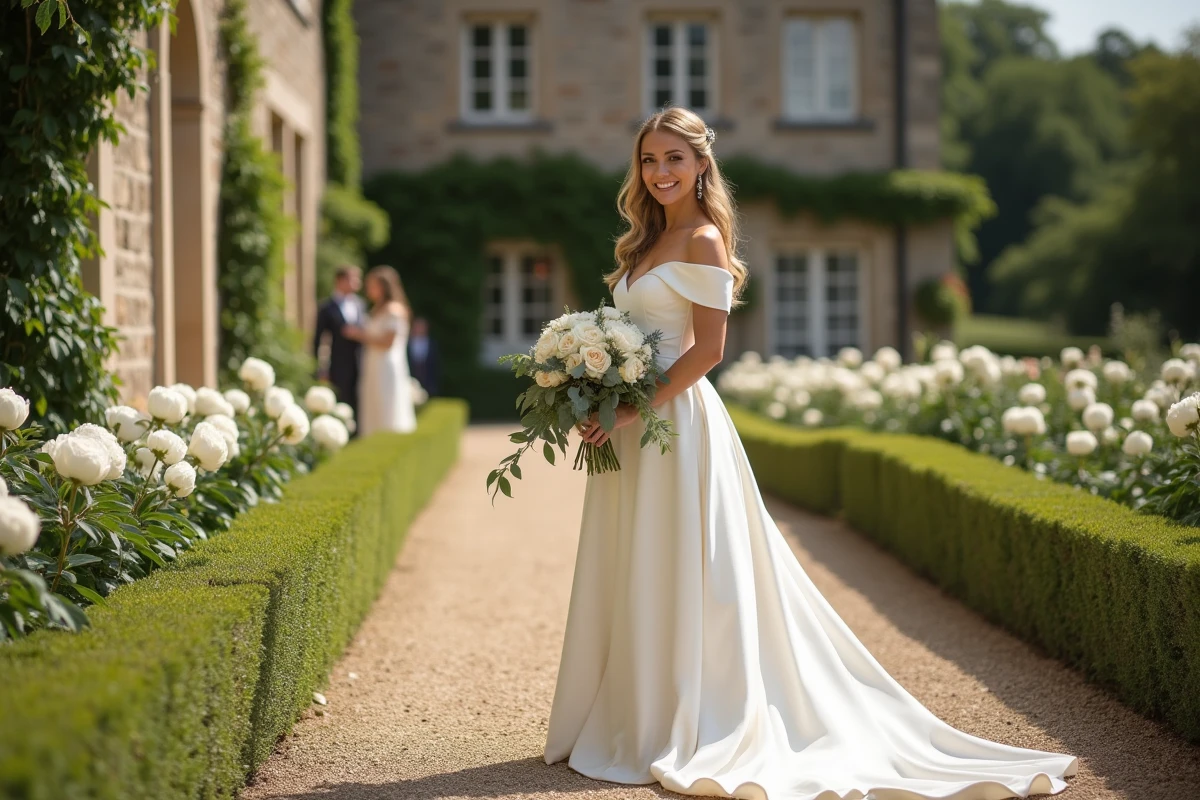
The wedding trends for 2024 are not just about a color palette or a style of dress. Behind the decor inspirations and clothing choices, a structural factor is reshaping celebrations: the persistent inflation over the past few years is prompting couples to rethink the size, format, and priorities of their event. Which budget items are shifting, and how is the micro-wedding asserting itself against traditional large receptions?
Micro-wedding and budget constraints: what inflation changes in 2024
The continuous rise in prices for catering, venue rentals, and floral services has a direct effect on the number of guests. Rather than compromising on the quality of each item, an increasing number of couples are choosing to reduce the guest list to focus the budget on the experience.
The micro-wedding (generally fewer than 30 guests) is no longer a default choice. It is becoming an intentional format, featuring a personalized ceremony, a gourmet meal rather than a buffet for 150 people, and carefully curated decor within a limited space. Fewer guests allow for upgrades on every detail, from the menu to the choice of venue.
To keep up with the news on Instant Mariage, intimate formats are among the most consulted topics by engaged couples in recent months.
This trend also has a collateral effect on service providers: some photographers, caterers, and wedding planners are adjusting their offerings with packages designed for small groups, where their pricing structures were historically calibrated for receptions of 80 to 200 people.
Wedding budget 2024: the items that are increasing and those that couples are prioritizing
Not all spending categories are evolving at the same pace. The table below summarizes the main trends observed in testimonials from couples and feedback from service providers published on specialized platforms.
| Budget Item | Observed Change | Common Prioritization Strategy |
|---|---|---|
| Catering / Food | Significant increase | Reduction in the number of guests or a menu with fewer courses |
| Venue | Moderate to high increase depending on the region | Opting for atypical venues (homes, public spaces, community venues) |
| Flowers and Decoration | Continuous increase | Dried flowers, local seasonal plants, minimalist decor |
| Wedding Dress | Stable to slight increase | Rental, second-hand, non-bridal dresses |
| Photography / Video | Stable | Half-day packages instead of full-day |
Catering remains the largest expense and the one where inflation is felt most directly. Reducing the guest list by half can free up a budget sufficient to upgrade from a standard buffet to a seated meal with higher quality products.
The venue is the second lever. Private estates and castles are showing rising prices, which is pushing some couples towards alternatives: weddings in family gardens, renting rural gîtes, or celebrations in restaurants that provide a room without additional rental fees.
Decoration and color trends for weddings in 2024: chosen sobriety rather than imposed restriction
The shift towards more understated decor is not solely based on financial considerations. The green wedding trend, already visible in previous years, is gaining coherence. Couples who reduce floral volume are not always doing so for cost savings: the choice of local and seasonal flowers is becoming an aesthetic as well as an ethical criterion.
In terms of color palette, the tones for 2024 are moving away from all pastels. Feedback from service providers and specialized publications highlight several directions:
- Sage green and terracotta shades, paired with raw materials (wood, linen, ceramics), for natural and warm atmospheres
- Bright pink and saturated colors (deep orange, intense blue) for couples who want to break away from traditional wedding norms
- Black and white in a graphic version, far from the classic, with contrasting designs on stationery, table decor, and the outfits of the couple
Minimalist decor, with fewer but better-chosen pieces, works particularly well in intimate formats. A well-designed centerpiece for 6 guests costs less and has a greater impact than a generic arrangement replicated across 15 tables.

Wedding dress and couple’s attire: the choice of reusability
Wedding dresses in 2024 reflect a dual movement. On one hand, streamlined silhouettes and minimalist cuts (thin straps, flowing crepe, without embellishments) appeal to brides who want a piece they can wear beyond the wedding day. On the other hand, the second-hand and rental market is growing.
The wedding dress worn only once is losing ground to sustainable alternatives. Some brides opt for a pantsuit or a dress not labeled “wedding,” which reduces the budget while expanding stylistic possibilities.
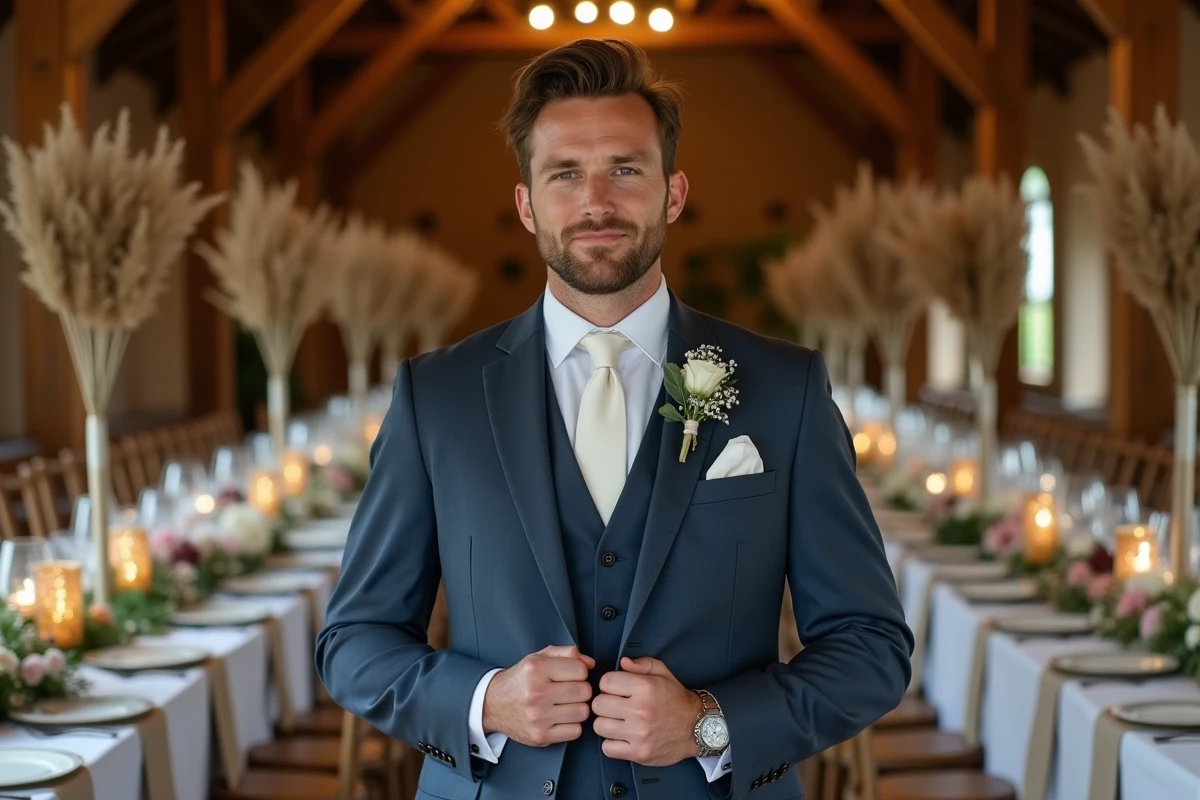
For grooms, the classic three-piece suit remains a safe choice, but the trend towards mismatched attire is gaining traction. A pair of trousers and a jacket in different shades or textures, coordinated with the overall palette of the event, are gradually replacing the uniform suit.
Civil ceremony and customization of the format in 2024
The civil ceremony continues to establish itself as a standard for couples who wish to control the proceedings from start to finish. The officiant, often a close friend trained for the occasion or a professional, tailors the texts, rituals, and duration to the wishes of the couple.
In a micro-wedding, this customization takes on another dimension: with fewer guests, the ceremony can include individual speeches, longer vow exchanges, or symbolic rituals that would be logistically complex with 150 people. The intimate format frees up ceremony time without extending the overall duration of the day.
The budget prioritization linked to inflation does not result in a degraded version of the wedding. It redefines priorities: less volume, more personalization, decoration and catering choices designed for a limited number of guests. Couples getting married in 2024 are spending differently, not necessarily less.