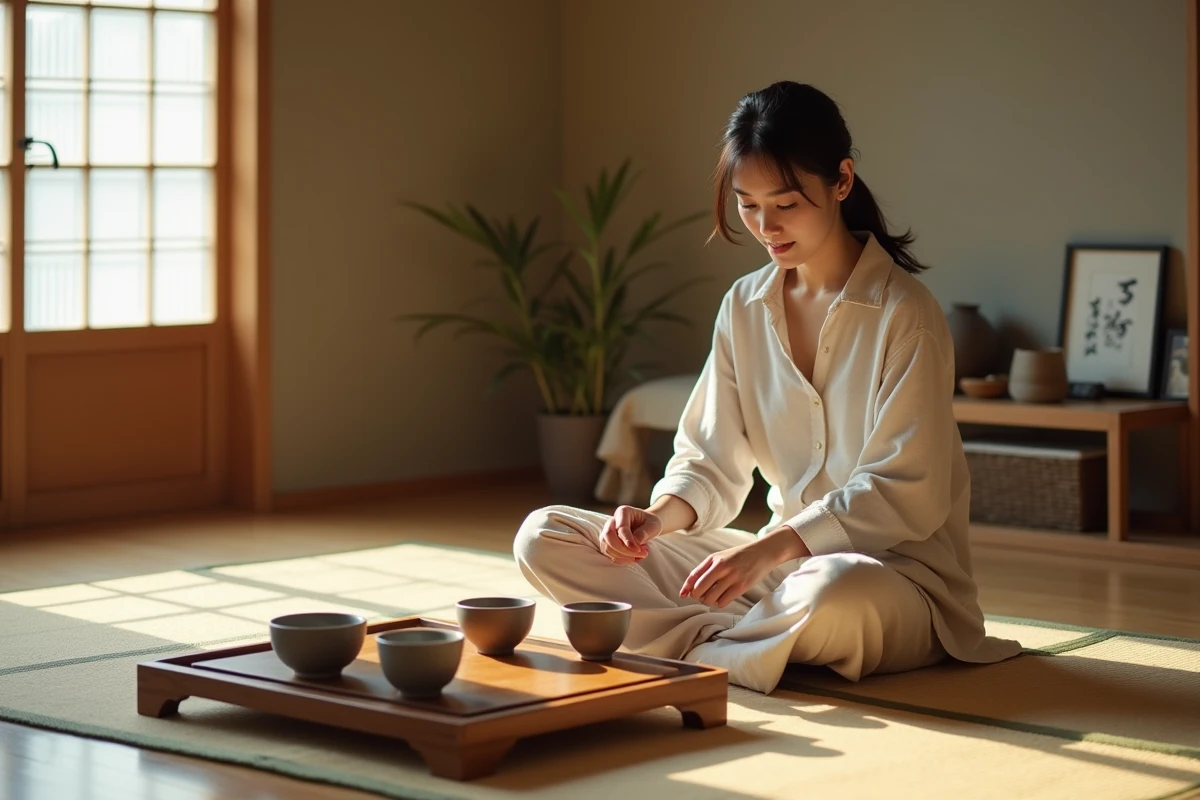
Placing a handcrafted Japanese piece of furniture in the center of the living room is not yielding to a whim or sacrificing to fashion. It is bringing a piece of living history into your home, inherited from centuries-old gestures, sometimes counter to Western expectations of comfort or design.
The workshops that create these pieces do not aim for quantity or conformity. They seek character, uniqueness, and the sincerity of the transmitted gesture. Each piece of furniture, each object shaped in these workshops questions our way of inhabiting, arranging space, and thinking about utility. We are far from standardized furniture designed to blend into the decor. Here, rarity and patina become virtues, simplicity an audacity, and the unexpected a promise of balance.
Why Japanese aesthetics are so appealing in interior decoration
Japanese decoration has an enduring allure. Its creed is minimalism: every object finds its reason for being, nothing is invited by chance. Light, natural materials, and open spaces create volumes where emptiness is a benevolent presence. The furniture favors light wood, bamboo, and rice paper. The idea? To bring the habitat closer to nature, without forcing contrasts, without overload.
Wabi sabi, this art of embracing imperfect beauty, permeates the Japanese home. A patinated piece of furniture, a chipped ceramic, an embraced asymmetry: everything becomes an excuse to re-educate the gaze. Authenticity takes precedence over ostentation, subtle balance erases the monotony of the series. This logic generates a peaceful, refined atmosphere that never falls into coldness or austerity.
The search for harmony is also reflected in the choice of materials, the presence of plants, and the precision of storage. Spaces are reinvented, light flows, the interior adapts to daily needs as well as moments of pause. The zen spirit is invited, discreet yet constant.
To go further, https://www.retbutiko.net/ analyzes in depth the foundations of Japanese decoration and Japanese design. It reveals how sobriety and nature become powerful levers to shape a unique interior identity, far from fashion trends.
Japanese handcrafted furniture: what specifics for an authentic interior?
Japanese handcrafted furniture is not just a decorative element. It structures the room, imposes its calm rhythm, and invites a different way of living. Low lines dominate: here are the iconic pieces often found in these reimagined interiors:
- chabudai table,
- futon,
- tansu chest of drawers or kotatsu for winter,
Each of these pieces brings you closer to the ground, slows the pace of daily life, and invites a reconnection between body and material, respecting the rhythm of nature even within the home.
Natural materials define the identity of Japanese furniture. Solid wood, bamboo, rice paper, stone, ceramics, and porcelain: each material, handcrafted, carries the memory of the artisanal gesture. These materials, raw or subtly polished, capture light, play with shadows, and create enveloping atmospheres.
Several characteristics make this furniture unique:
- Modularity: tables, futons, storage—everything folds, moves, adjusts. Spaces evolve, the room lives at the pace of its inhabitants.
- Functionality: beneath a minimalist exterior, ingenuity reigns. The secret drawers of the tansu, the diffuse warmth of the kotatsu, or the versatility of the tatami meet daily needs without sacrificing elegance.
Japanese craftsmanship is recognized by the precision of the joints, attention to detail, and the pursuit of balance in asymmetry. It is never showy, but rather a deep coherence, a silent beauty that transforms furniture into a living work of art. Each piece finds its place, giving meaning and cohesion to the whole. The atmosphere that emerges invites contemplation, calm, and the serenity of the right gesture.
Inspiring ideas to integrate the japandi spirit at home with unique pieces
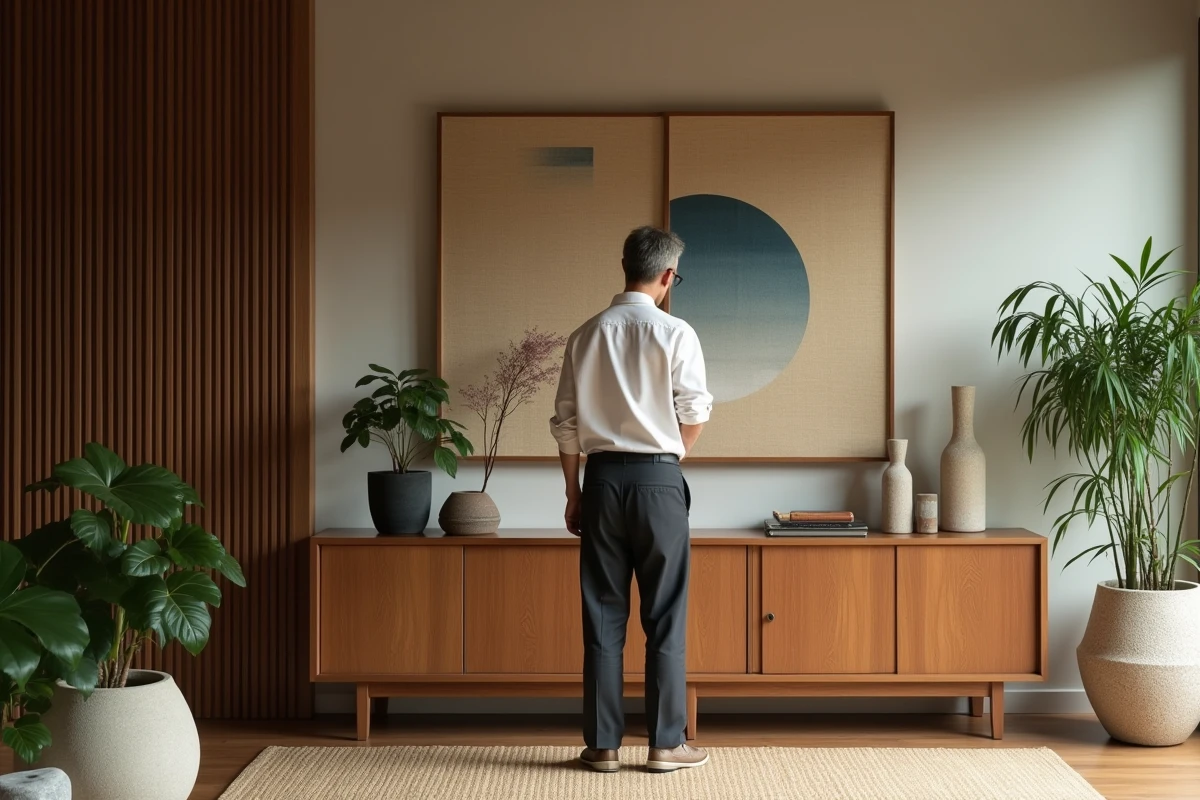
The japandi style combines Japanese sobriety with the warmth of Nordic hygge. Each Japanese handcrafted piece of furniture becomes an anchor point, a reference in space, and here’s how it can transform the ambiance:
- a raw wood coffee table structures the living room,
- a tansu modulates the light,
- a zabuton extends relaxation on a tatami.
The whole creates a relaxed atmosphere, never cold, where every detail finds its rightful place.
For the japandi spirit to fully express itself, certain choices make a difference:
- Opt for a neutral color palette: off-white, beige, gray, deep brown. These shades enhance light and highlight the beauty of natural materials.
- Add Japanese patterns in small touches: a seigaiha cushion, a cherry blossom tapestry, a textile embroidered with cranes. Tradition is invited without ever saturating the space.
- Incorporate natural elements: bonsai, fern, orchid next to a lantern. Nature becomes a soothing and inspiring presence.
- Consider lighting: multiply discreet sources, rice paper lanterns, soft light through a shoji. The ambiance gains in softness and depth.
A small mineral garden, a zen fountain, or a few polished pebbles further accentuate the feeling of calm. The japandi spirit is built through attention to material, form, and the coherence of each choice. Here, each object tells a story and invites a reconnection with the beauty of everyday life, far from superfluous ornamentation. We no longer just furnish a room: we shape a refuge, a space to live, to feel, to pass on.