
A poorly calibrated baby registry generates duplicates, unused items, and a leftover fund that is difficult to recover. The choice of platform, the structure of guarantees, and post-purchase follow-up directly determine the actual value of each gift received.
Traceability of items and product recall monitoring on a baby registry
We observe a recurring blind spot in the management of registries: no systematic follow-up on product recalls after gifts are received. Loved ones give gifts, the package arrives, and the exact product reference often disappears in the flow of the first few days.
The RappelConso portal, however, lists regular alerts on childcare items and toys. A notice published on September 16, 2026, reported a teething ring whose wooden ring could break, releasing a fragment with a choking hazard. A refund was planned. In September 2026, a light-up toy was recalled because its button batteries became accessible, posing a risk of ingestion and internal burns.
These defects are undetectable to the naked eye upon unboxing. We recommend keeping the product reference, batch number, and proof of purchase for each gifted item. Most registry platforms do not offer automated export of this data, making manual work necessary.
Before adding a product to your list, you can learn more about Ouaps regarding the operation, fees, and guarantees offered by different platforms.
Guarantees and return conditions: what the registry platform changes
The legal guarantee of conformity applies regardless of the purchase channel, but its exercise varies depending on the structure of the registry. Three scenarios arise.
- Single-brand registry: returns and exchanges go through the standard store circuit. The recipient (the parent) is identified as the beneficiary, and the proof of purchase is centralized. The trade-off is a catalog limited to the brand’s references.
- Multi-brand registry with redirect: each purchase is finalized at a different merchant. The guarantee depends on the terms and conditions of each store. In case of a defect, the parent must identify the original merchant, which assumes that the platform retains the order history.
- Registry with free fund: funds are transferred to the parents, who make the purchases themselves. They then become direct buyers and benefit from all consumer protections but lose the advantage of a “turnkey” gift.
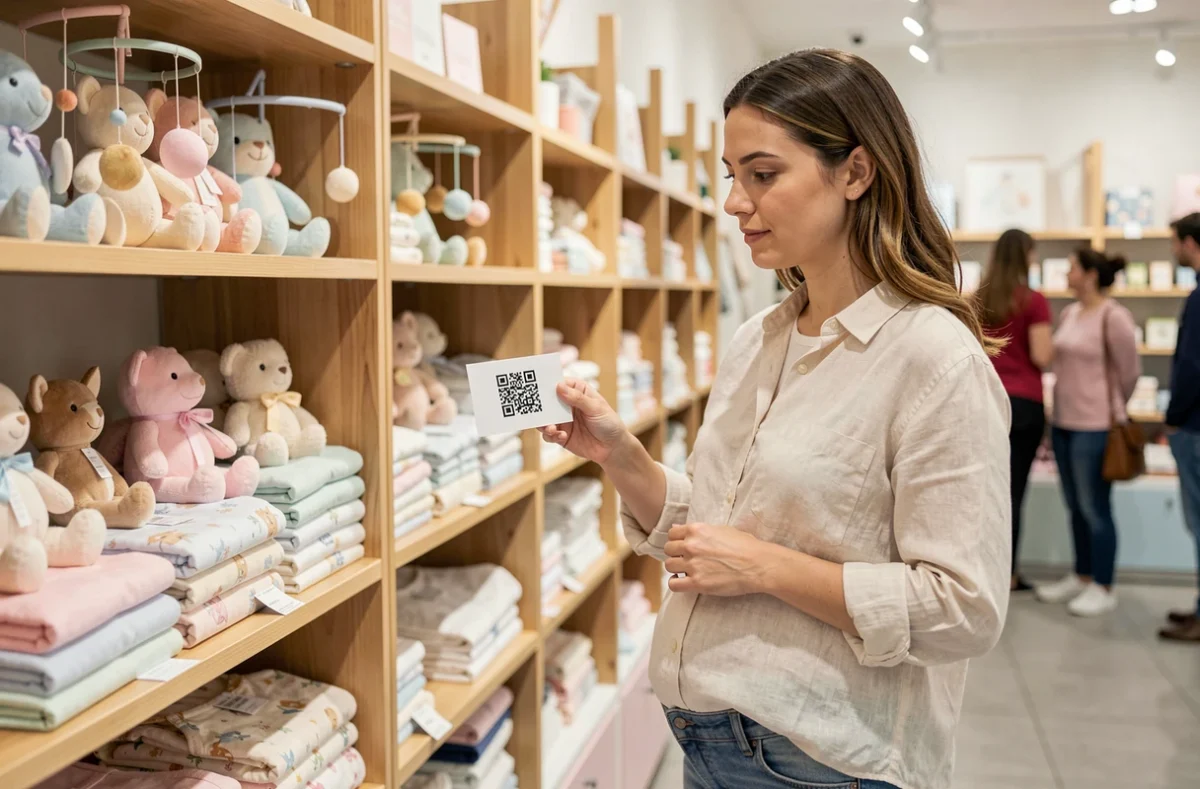
On fund-based platforms, check the commission fees and transfer times. Some retain a percentage on each contribution, while others only charge at the time of transfer. The amount actually received may differ significantly from the amount displayed on the registry page.
Returns on items gifted by a third party
The fourteen-day withdrawal right applies to online purchases, but the starting point of the period runs from the receipt by the buyer (the loved one), not by the parent. If the package passes through the platform before reshipment, this period may already be significantly advanced upon arrival at your home.
We recommend prioritizing platforms that offer a specific extension of the return period for baby registries. Some brands extend this period well beyond the legal minimum, precisely because the use of the product is delayed over time.
Second-hand and baby registry: a selection criterion in its own right
Second-hand items are firmly rooted in childcare, primarily motivated by price. It is no longer a one-time resort but a structural buying reflex for young parents.
Incorporating second-hand items into a registry poses a technical problem: most platforms operate through affiliate merchant links or internal catalogs, two mechanisms incompatible with items sold between individuals. The most reliable solution remains a designated fund, where the parent specifies the targeted item and purchases it themselves in the second-hand market.
A second-hand item is not covered by any commercial guarantee. The legal guarantee for hidden defects remains theoretically applicable between individuals, but its exercise is complex. For safety items (crib, car seat, baby carrier), we advise against second-hand unless there is complete traceability of the product history.
Safety standards and second-hand childcare items
A crib must comply with the standard in force at the time it was placed on the market. An older model, even in good visual condition, may have a spacing of bars that does not meet current requirements. Always check for the presence of markings and the date of manufacture.

Appropriate structure of a baby registry: mixing price ranges
An effective registry covers at least three budget ranges to accommodate the capacity of each contributor. Including low-priced items prevents some loved ones from opting out of participation.
- Entry-level items (under twenty euros): bodysuits, bibs, care products, small developmental toys. They represent the main volume of contributions.
- Intermediate items: seasonal clothing, bath accessories, breastfeeding equipment. This is the range where duplicates occur most often if the list is not updated in real-time.
- Major items (stroller, crib, car seat): offer them as shared contributions rather than individual purchases. Most platforms allow splitting the funding of an expensive item among several contributors.
Update the list after each confirmed purchase. Platforms that do not send automatic notifications to the parent generate a high risk of duplicates, especially on the most common items.
The final choice of platform depends less on its catalog than on its return management, transparency regarding fees, and its ability to centralize proof of purchase. A tool that meets these three criteria simplifies the first months much more than a list filled with prestigious references but unmanageable after the birth.