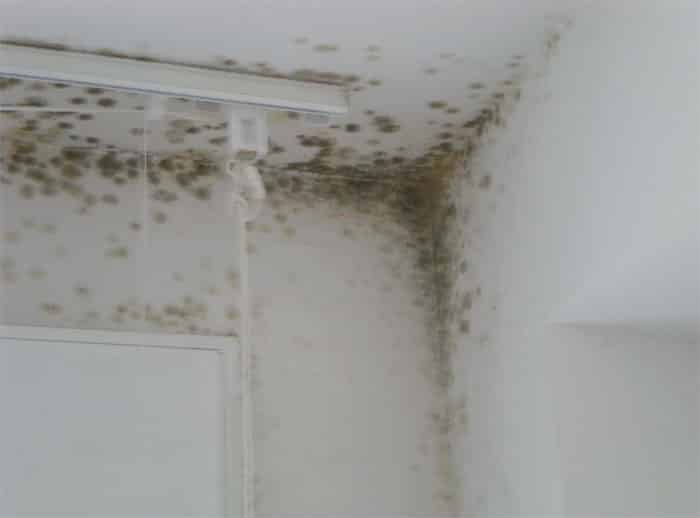
A stain has appeared on the wall or ceiling or in a corner of a room? It’s certainly mold caused by humidity, which in turn is due to various factors. This is not something to take lightly or ignore; you need to address this problem quickly because humidity on walls or ceilings can be a breeding ground for fungi (yum 🙂) and harmful microorganisms for your family’s health, especially if you suffer from allergies. Your home could become unhealthy. Only here, you don’t know much about it, and you might need a helping hand? You’ve come to the right place, as with our other DIY guides, we’ve found the best tips and tricks to treat your walls according to each case. To start, how do you detect humidity? Besides the appearance of visible stains (which may have a more or less artistic rendering, we agree), you may also start to smell damp plaster, paint or wallpaper that is bubbling, the room where the humidity is located starts to feel colder, and after that, spores of fungi begin to float in the air which, sooner or later, can cause respiratory problems or worsen lung diseases, such as allergies or asthma. There are different types of humidity:
Summary
- 1. Humidity from condensation
- 2. Humidity from rising damp (or capillary rise)
- 3. Infiltration humidity
- Find our other DIY and repair tips!
-
- — How to install curtain rods like a pro?
- — How to hang a curtain rod like a pro
- — The 8 tasks you should (probably) not do yourself
- — How to fix a hole in a wall in 4 steps?
-
1. Humidity from condensation
Humidity produced in showers or from breathing creates a condensation effect that settles on walls and ceilings. Detectable signs include condensation on windows, difficulty heating the house, and other unpleasant odors.
Mold develops and your health can be affected, causing illnesses such as asthma, sinusitis, respiratory allergies, headaches…
Causes of condensation humidity:
- Poor ventilation.
- Insufficient thermal insulation of partitions
- Insufficient thermal insulation in windows.
- Poorly placed heating. If possible, they should be placed under the windows.
- Incorrect use of intermittent heating
How to solve the problem of condensation humidity?
- Ventilation: the easiest way to avoid condensation in a room is to ventilate for 5 to 10 minutes a day. In a short time, you will have fresh and renewed air in the room, avoiding condensation.
- Install windows with good thermal insulation: if our window is not well insulated, the temperature difference between the inside and outside of the house can cause condensation on the windows and thus increase humidity.
- Install windows with a controlled ventilation system.
- Dehumidifier: Another effective way to reduce condensation problems is to install dehumidifiers in the most humid rooms of the house, such as the bathroom or kitchen. The goal is for the dehumidifier to keep the ambient humidity below 50%.
2. Humidity from rising damp (or capillary rise)
Of course, it doesn’t matter the hair here; your last haircut would not be the cause of the humidity in your apartment, we assure you. This type of humidity is mainly seen in main rooms with a wall that faces the outside, or even on exterior walls.
Consequences of capillary rise:
- Accelerated wear of building materials and joints, which can be a danger to the structural integrity of the rooms.
- Dangers with electrical installations.
- Damage to furniture, wooden frames, doors, windows, flooring, stored items, electrical appliances (computers, Hi-Fi equipment), etc.
- Serious aesthetic problems, systematically failing all attempts at painting or wallpapering.
- Increase in heating bills by 15% to 30%.
- Effects of capillary rise on health: causes unpleasant sensations of discomfort (chills, damp clothes and sheets…), promoting the emergence of flu and colds.
How to get rid of wall humidity from capillary rise:
- Wall insulation: If our house is already built, we can cover the interior walls with a layer of coating aimed at insulating between the wall and the paint, and preventing mold.
- Check the pipes in the house for leaks: it is not worth treating a stain of humidity locally if the problem is deeper and the stain is reformed due to a chronic leak from a pipeline.
- Ensure that drains are not blocked: avoid water leaks and other infiltrations if possible.

3. Infiltration humidity
Basements, cellars, and other garages below ground level are more prone to humidity from infiltration. This type of humidity causes unpleasant sensations of discomfort; we find the same array of “good feelings,” chills, damp clothes and sheets… all of which promote the onset of colds and flu.
Causes of infiltration:
If the walls of a room are in direct contact with the ground, and below ground level, humidity can pass from the ground to the walls, seriously damaging them. Of course, there is an aggravating factor for those living in very rainy areas, like Seattle… or Quimper.
Consequences of infiltration:
- Accelerated wear of building materials and joints, which can be a danger to the structural integrity of your home.
- Dangers with electrical installations.
- Damage to furniture, wooden frames, doors, windows, flooring, stored items, electrical appliances…
- Aesthetically, it’s a disaster.
- Increase in heating bills by 15% to 30%.
How to get rid of humidity on walls if we have infiltrations:
- Wall insulation: We can cover the interior walls with a layer of coating that will insulate between the wall and the paint, and we can apply a mold-resistant coating.
- Drainage: if the water flow is regular, you may be placed on a “water line,” near a watercourse or groundwater, it is necessary to set up a drainage system that will divert the flow of water.
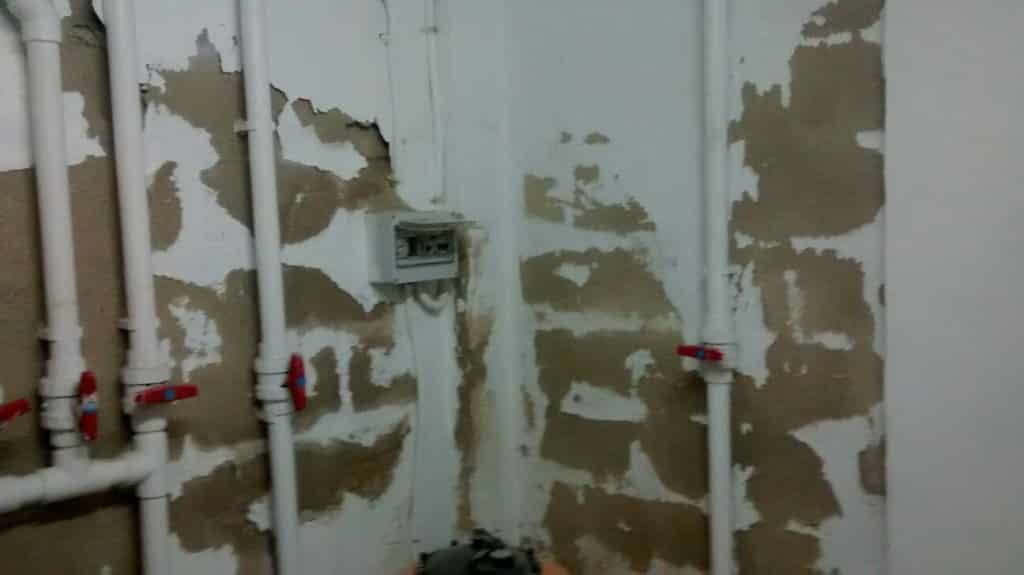
As we have seen, the causes of humidity can be varied, and depending on the type of humidity, we need to take certain measures. Hopefully, these tips have been helpful to you.
If despite everything you need a hand with plumbing, painting, or other things, ask for help on Helpy 😉
Find our other DIY and repair tips!
— How to install curtain rods like a pro?
— How to hang a curtain rod like a pro
— The 8 tasks you should (probably) not do yourself
— How to fix a hole in a wall in 4 steps?
Tag : remove moisture stains