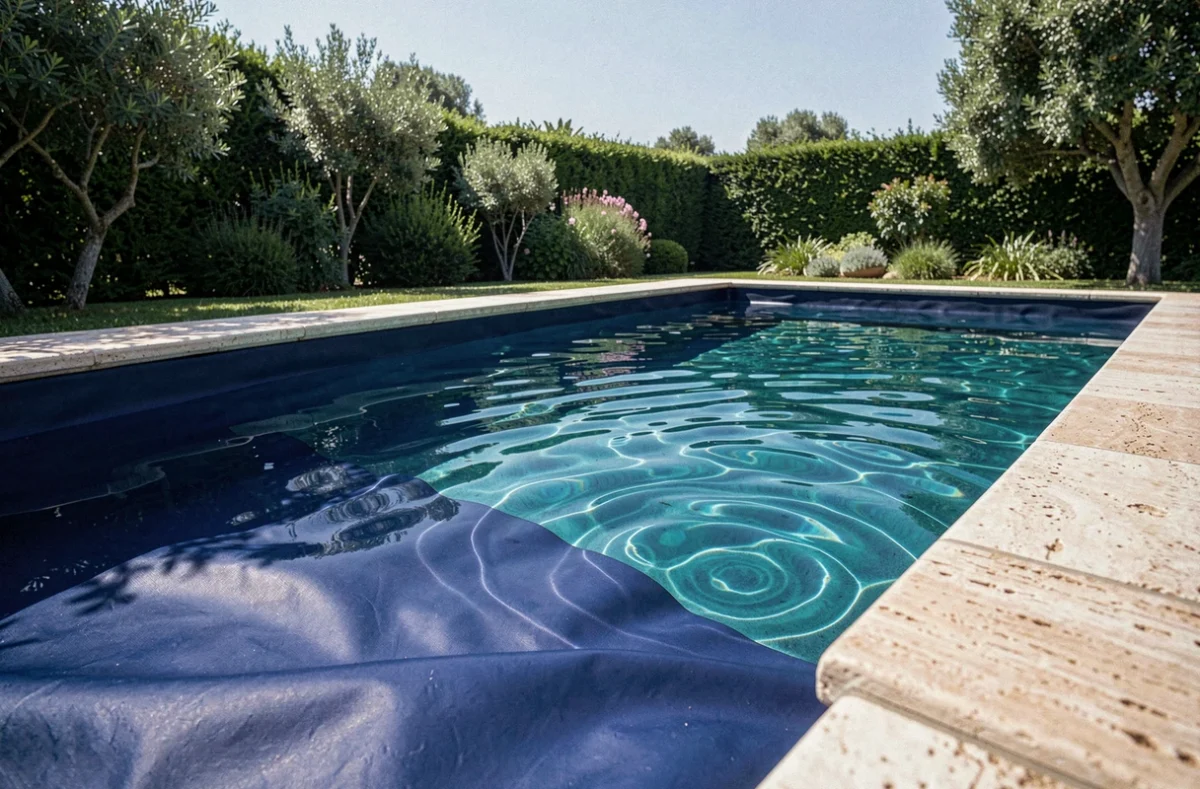
The liner’s color determines the perceived shade of the water, the pool’s atmosphere, and how well it blends into the garden. This is not a minor decorative choice: the liner acts as an optical filter. Light passes through the water, reflects off the colored membrane, and returns to the surface with a modified hue. Understanding this process helps you make an informed choice rather than relying solely on a dry sample placed on a table.
Liner and light: why the perceived color changes with conditions
The same liner will not look the same at midday in full sun as it does under an overcast sky at the end of the day. Vivid shades, such as bright blue, retain their intensity even under gray skies. Neutral shades (light gray, sand, white), on the other hand, may look duller or slightly greenish when the light fades.
This variation is due to the color temperature of natural light. In full sun, the light is white and reproduces the liner’s color faithfully. On overcast days, it takes on a blue-gray cast and softens warm tones. A sand-colored liner that looks golden in summer may appear dull under a low, overcast sky.
To avoid surprises, compare samples submerged in water at different times of day and in different weather conditions before settling on a color. A dry sample viewed in a store represents only a fraction of the final appearance.
A pool liner color simulator lets you preview the result by visualizing how it will look in a virtual pool, making it a useful complement to viewing physical samples.
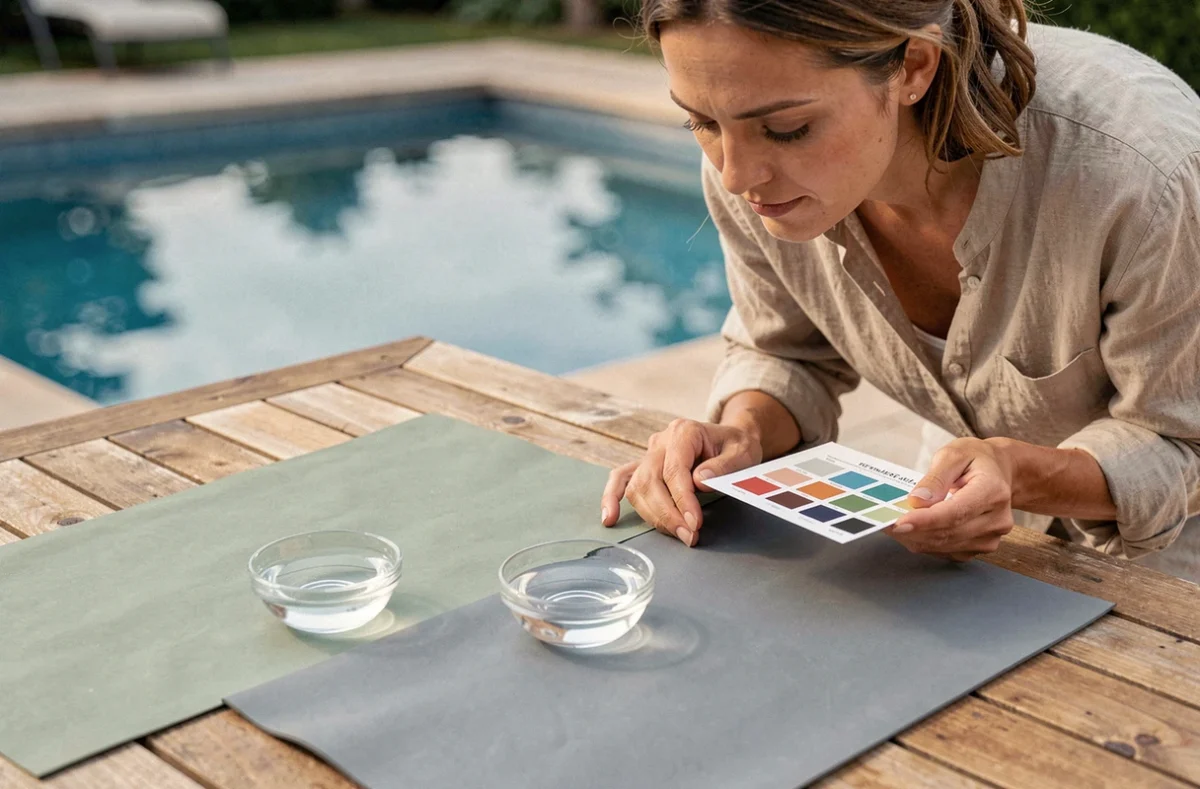
Liner color and water appearance: the main color families
Each color family creates a distinct effect on the water. Choose by weighing two factors: the water color you want and the landscape style you’re aiming for.
Light blue and bright blue liners
Blue remains the most popular color. A light blue liner creates bright turquoise water reminiscent of Mediterranean pools. Bright blue, with its more saturated hue, retains its intensity even in overcast weather. These shades make it easier to spot debris and early algae growth, simplifying water quality monitoring.
Slate gray and charcoal gray liners
Gray gives the water a mineral look, often described as mirror-like in calm conditions. A dark gray liner visually transforms the pool into a natural pond, reminiscent of a mountain lake. The effect is more understated and contemporary. The trade-off: a dark surface absorbs more solar heat, which can warm the water slightly in summer.
Sand and beige liners
These warm shades give the water green and golden reflections, evoking a lagoon or beach. They blend well into gardens planted with ornamental grasses or Mediterranean species. However, a light-colored pool floor makes deposits more visible and requires regular cleaning to maintain its appearance.
Green liners
Green gives the water an emerald appearance, making it especially effective for blending the pool into a wooded setting. One point to consider: a green shade can conceal the early stages of algae growth, as the water’s natural color blends with that of the microorganisms. This color is better suited to owners who regularly check their water parameters.
Black liners
Black creates a striking mirror effect. The water reflects the sky and surrounding vegetation like a lacquered surface. This choice calls for carefully maintained surroundings: every element around the pool is reflected in the water. A black liner absorbs heat more noticeably than lighter shades, affecting the pool’s temperature during the height of summer.
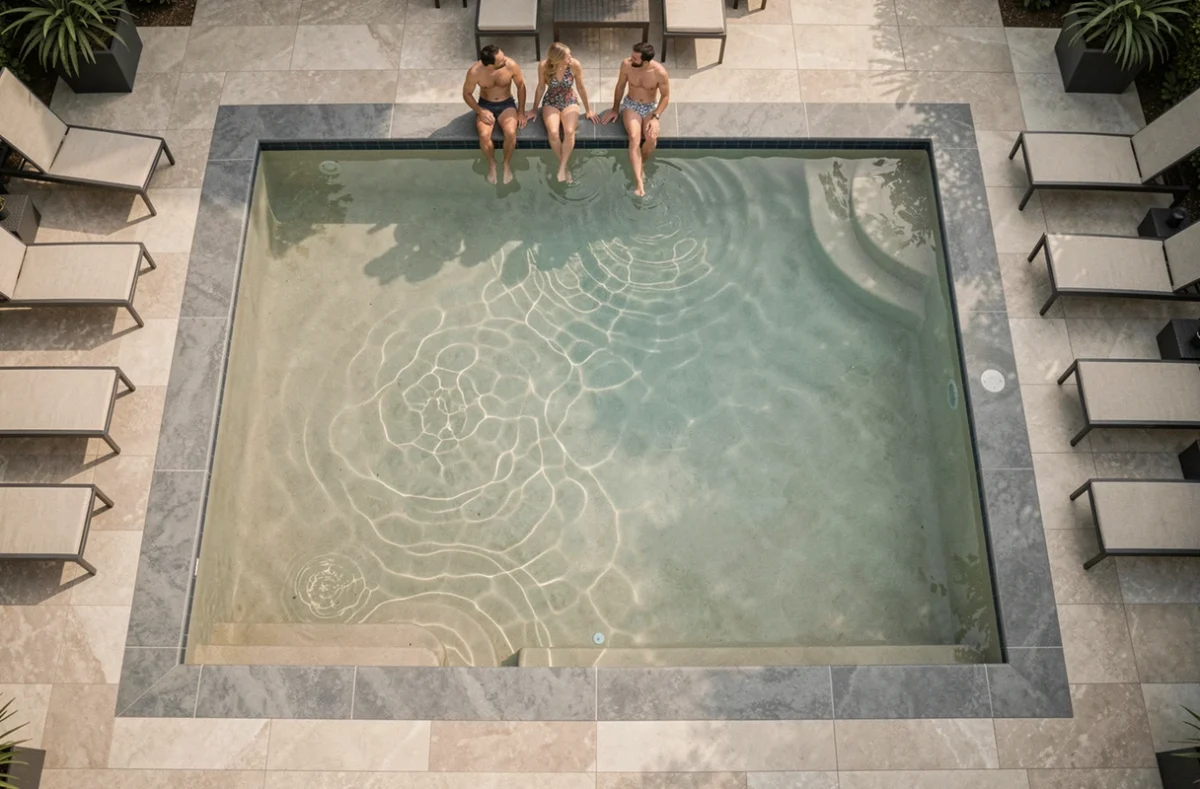
Liner texture: an overlooked factor that affects appearance and safety
Color gets all the attention, but the membrane’s texture also makes a practical difference. Some ranges offer smooth finishes, while others have textured surfaces that imitate stone, tile, or a fine-grain finish.
Beyond aesthetics, texture affects safety. Areas where people walk (steps, submerged ledges, gently sloping floors) benefit from an anti-slip finish. This option is available in most colors, but is not always offered as standard, so be sure to ask for it.
You can therefore make your choice in two stages:
- First, select a shade based on the water appearance you want and how well it will blend into the landscape.
- Then check that the chosen color is available in your preferred finish (smooth, textured, or anti-slip).
- Consider a specific finish for walking areas if the main liner is smooth.
Pool liner maintenance and durability by color
Not all colors age in the same way. Exposure to ultraviolet light gradually fades the pigment, and this effect is more pronounced with darker shades. A black or charcoal gray liner will lose its intensity more visibly over the seasons than a light blue liner.
Routine maintenance also depends on the color:
- Light-colored liners (white, sand, pale blue) show limescale stains, organic deposits, and waterline marks more clearly.
- Dark liners (gray, black, deep green) hide dirt better but make scratches and signs of wear more noticeable.
- Regular waterline cleaning is necessary regardless of color, as greasy residue builds up at the same rate on all shades.
Color does not affect the liner’s lifespan, which depends mainly on the membrane’s thickness, the water’s chemical balance, and the quality of the installation. A poorly installed liner will deteriorate quickly, whether it is light blue or black.
The final choice comes down to balancing the visual effect you want, the maintenance requirements you’re willing to accept, and the site’s lighting conditions. A pool facing due south in a mineral-style garden will look different from a shaded pool nestled in lush greenery. Observing the site at different times of day is still the best way to prepare before choosing a color.