When designing a kitchen, the efficiency of the hood is often overlooked, even though it is essential for maintaining a clean environment free from smoke and odors. Choosing the right power for a hood can seem confusing with the multiple options available on the market. This decision relies not only on technical criteria but also on the specific needs of your culinary space and cooking habits. Let’s dive into the details to shed light on this crucial choice.
The Technical Criteria for Choosing the Power of Your Hood
To determine the ideal power of the hood, it is imperative to take into account several technical criteria. These aspects ensure effective extraction tailored to your kitchen.
- The volume of the kitchen: Calculate the volume of your kitchen by multiplying the length, width, and height. The power of the hood is measured in m³/h (cubic meters per hour). For optimal efficiency, the hood should renew the air in the kitchen 10 to 12 times per hour.
- The type of cooking: If you often cook using methods that generate a lot of smoke or steam, such as frying, a more powerful hood will be necessary. Fans of stews or grilled dishes will need a hood capable of handling large volumes of smoke and grease.
- The distance between the hood and the cooking area: A hood installed at an optimal distance (about 65 to 75 cm above the cooktop) will provide better performance. A distance that is too great or too small can reduce extraction efficiency.
- The ventilation: An externally vented hood is often more effective than a recirculating hood. If your kitchen allows for external ventilation, this option can reduce power requirements.
The Different Types of Hoods and Their Impact on Power
There are various types of hoods, each with its specificities and impact on the necessary power. Understanding these differences will help you make an informed choice.
Wall hoods: Mounted directly on the wall above the cooking area, they generally require moderate to high power depending on the size of the kitchen. They are versatile and suitable for most configurations.
Island hoods: Installed above a cooktop located on a central island, they often require higher power due to their distance from the walls, which demands extra effort to capture smoke and odors.
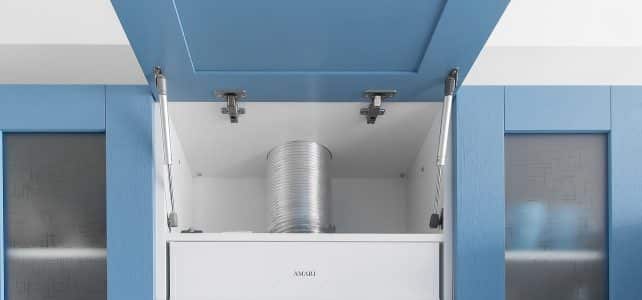
Built-in hoods: Integrated into kitchen furniture, they are discreet but also require sufficient power to ensure good extraction despite their integration into the cabinetry.
The professional restaurant hood is designed for commercial kitchen environments where intensive extraction is crucial. To learn more about professional hoods, you can check this link: professional restaurant hood.
Calculating the Necessary Power for a Hood
The calculation of a hood’s power is based on a simple yet effective formula that allows you to adapt the ventilation to the specific needs of your kitchen.
For a kitchen with external ventilation:
- Calculate the volume of the kitchen in m³ (length x width x height).
- Multiply this volume by 10 to obtain the necessary power in m³/h.
For a kitchen with recirculation:
- Use the same calculation method as for external ventilation.
- Add 30% additional power to compensate for the loss of efficiency due to the filtration process.
Optimizing the Use of Your Hood
Some simple practices can optimize the use and efficiency of your hood, regardless of its power.
- Early activation: Turn on the hood a few minutes before you start cooking to establish an effective airflow from the beginning of the cooking process.
- Regular maintenance: Clean the filters regularly to avoid the buildup of grease and dirt that can reduce your hood’s performance.
- Appropriate use: Adjust the power of the hood according to the type of cooking. Use high power for frying and moderate power for gentle cooking.
- Additional ventilation: Adequate ventilation of the kitchen, such as opening a window, can help the hood operate more efficiently.
Choosing the right power for a hood is not a decision to be taken lightly. By carefully considering the volume of your kitchen, your cooking methods, and the type of hood, you can ensure a healthy and pleasant cooking environment. A well-chosen and properly maintained hood will ensure optimal extraction, thus protecting your culinary space from the nuisances associated with smoke and odors. By following these tips, you will be able to make an informed choice tailored to your specific needs.